
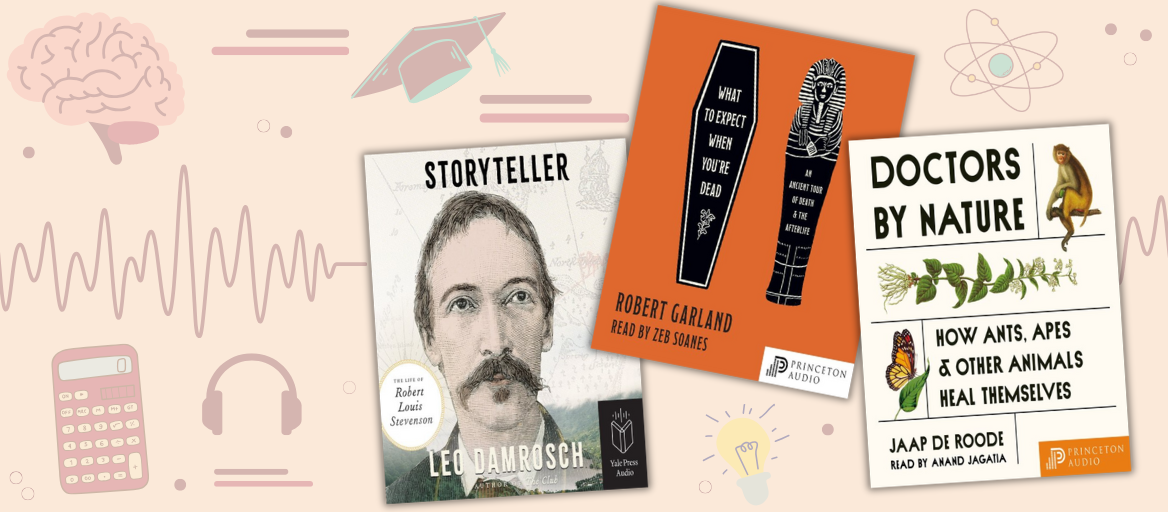
Smart listening: 8 academic audiobooks that are surprisingly accessible
Many people probably look at academic publishers and think “textbooks.” And if not textbooks, then some reference book that could serve as a blunt object murder weapon in Clue. But university presses are so much more than that, and honestly, can be a lot of fun. For instance, my favorite book last year was Pox Romana by Colin Elliott. It’s a history book about the Antonine plague that ravaged the Roman Empire and was likely the first global pandemic. And guess who published this gem? Princeton University! And not only is it incredibly fun and readable, it’s available on audio, which meant I got to listen to it along with my husband. (Yes, listening to history audiobooks is a popular pastime in my household.)
With this in mind, I introduce eight enjoyable audiobooks from academic presses available on the Libby app. So up your pleasure listening game with one (or all) of these exciting titles!
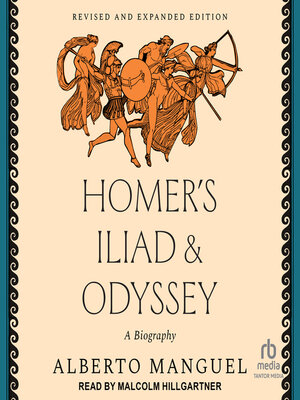
Homer's Iliad and Odyssey
by Alberto Manguel
Move over Marvel—the hottest literary property right now thanks to Christopher Nolan’s upcoming film is Homer’s The Odyssey. With the popularity of Homer’s original, as well as so many retellings, the story is familiar—Odysseus leaves Troy after the Greeks’ war against that city, but he has a lot of trouble getting home. For a deeper dive into why this story, and The Iliad, have endured, Manguel’s book is a must read. And if you still need to check out or want to revisit Homer’s original, the author recommends and cites the Robert Fagles translation, which, oh by the way, is read by none other than Ian McKellen.
Read by Malcolm Hillgartner
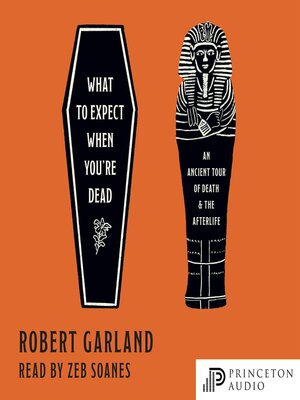
What to Expect When You're Dead
by Robert Garland
Can a book about death be a lighthearted, quick-paced listen? Astonishingly enough, absolutely! Garland looks at rituals and beliefs surrounding death and the afterlife in numerous ancient societies, from Zoroastrians to Egyptians, as well as Jewish, Christian, and Muslims beliefs. What do you do with a dead body? Well, it depends on if you think the body will be needed again to navigate the underworld or be resurrected at the end of days. Or, maybe the body isn’t needed at all. Who knows for sure, but Garland delights in explaining what various people have thought through time.
Read by Zeb Soanes
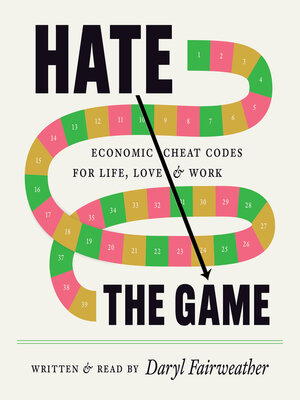
Hate the Game
by Daryl Fairweather
Economic and life advice from an academic press seems like a good idea, if potentially impenetrable and dull. But that's not the case with Fairweather’s debut! Uncertain what she wanted to study at college, the summer after finishing high school, Fairweather’s father gave her Freakonomics. That book proved lifechanging, as it determined her to study economics. In fact, she so took to the topic that she ended up at the University of Chicago for graduate school, studying with Steven Levitt, one of the book’s authors. The first black woman to receive a PhD in Economics at Chicago, Fairweather has now used all that knowledge to write her own book about applying economic theory to improving your life.
Read by the author
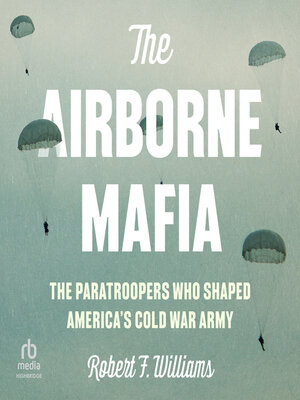
The Airborne Mafia
by Robert F. Williams
Why is the current U.S. Army structured the way it is? According to Williams, it’s because ever since WWII, the driving force behind Army decision making has been the Airborne Mafia, the men who pioneered jumping out of perfectly good airplanes to then act independently when necessary. These men set the culture for the U.S. Army—leaders jump first and eat last, for example—when many of the most important post-war positions were taken by paratroopers. And their ideas continue to hold sway, as the prestige that comes with jump wings is necessary to move up the ranks.
Read by Jim Seybert
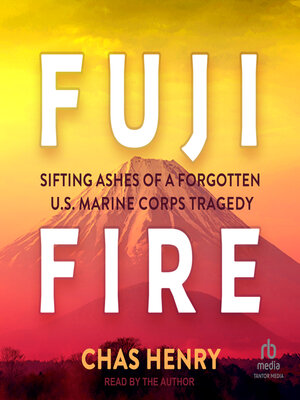
Fuji Fire
by Chas Henry
Maybe it’s Veterans Day being just around the corner, but I had to include a second military history. Well, I also had to include it because Fuji Fire covers an event in American military history entirely new to me. In 1979, the biggest tropical cyclone on record slammed into Japan. It was destructive in its own right, but the storm also set in motion a tragedy at the U.S. Marine camp located on Mt. Fuji when the fuel farm caught fire, killing 13 and severely burning dozens more. Henry details what led up to this tragedy and follows the injured Marines through recovery and lessons learned. Do be advised the burn descriptions are pretty detailed in this riveting listen.
Read by the author
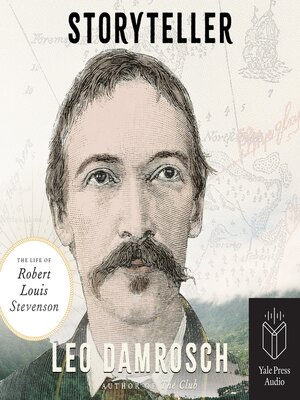
Storyteller
by Leo Damrosch
Really and truly, this biography of Robert Louis Stevenson is just as ridiculously compelling as any of his novels. Author of such classics as Treasure Island and The Strange Case of Dr. Jekyll and Mr. Hyde, Stevenson was a sickly Scottish child, raised by his nurse, and uninterested in formal education. But he was a passionate reader, and, well, passionate about other things as well. The book is an exciting listen, thanks to Damrosch’s clear enthusiasm for his subject, as well as Pryal’s great narration, getting just enough of the Scottish brogue to add texture, but not enough to make someone unused to the accent struggle.
Read by Richard Pryal
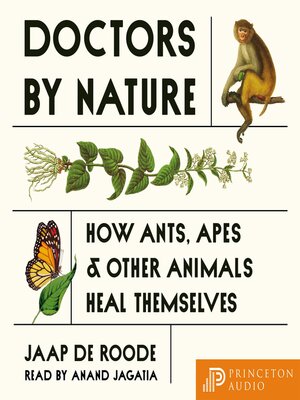
Doctors by Nature
by Jaap de Roode
What do animals in the wild do when they get sick? Just wait and hope they get better, or do they treat themselves? De Roode believes many animals have found a way to do the latter. In fact, in his studies, he’s discovered that animals, from butterflies to apes, seek out medicinal plants when they are ill. But why are some plants medicinal in the first place? (Spoiler—often to stop other insects and animals from eating them!) Each chapter leads to yet another discovery like this, keeping de Roode’s popular science book moving and extremely engaging.
Read by Anand Jagatia
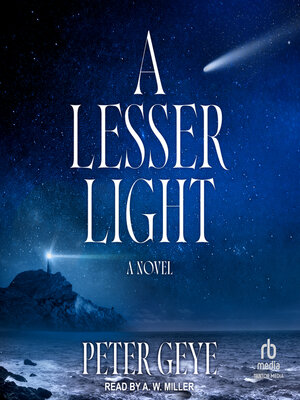
A Lesser Light
by Peter Geye
And lest you think academic presses only publish nonfiction, I cannot speak glowingly enough about this remarkable novel from the University of Minnesota Press. In its simplest terms, it’s the story a marriage of convenience between an older lighthouse keeper and a decidedly younger woman whose family has fallen on hard times in early 20th-century Minnesota. But it’s so much more than that. It’s a character study of passionate intellectuals, stultifying social norms, and two people who might not be as different as they seem even as they struggle to live under the same roof.
Read by A. W. Miller
*Title availability may vary.
Level up your listening and borrow one of these audiobooks on the Libby app! It’s a no brainer.
💡Pro tip: If a title isn’t available if your library’s collection, you can share your interest with the library via the Notify Me button and get an alert if they purchase it.
RELATED READ: Listen & learn: 30 audiobooks that can teach you something new
Published Nov 04, 2025
Shelia Mawdsley
Shelia Mawdsley did everything from answering questions at the Reference Desk to tech training to running a classic lit book club in her 17 years in public libraries. Now she helps other public libraries make the most of their collections in Libby. In her spare time, she’s either writing or reading, usually with an opera playing in the background. If you ever run into her, ask Shelia about #WITMonth.