
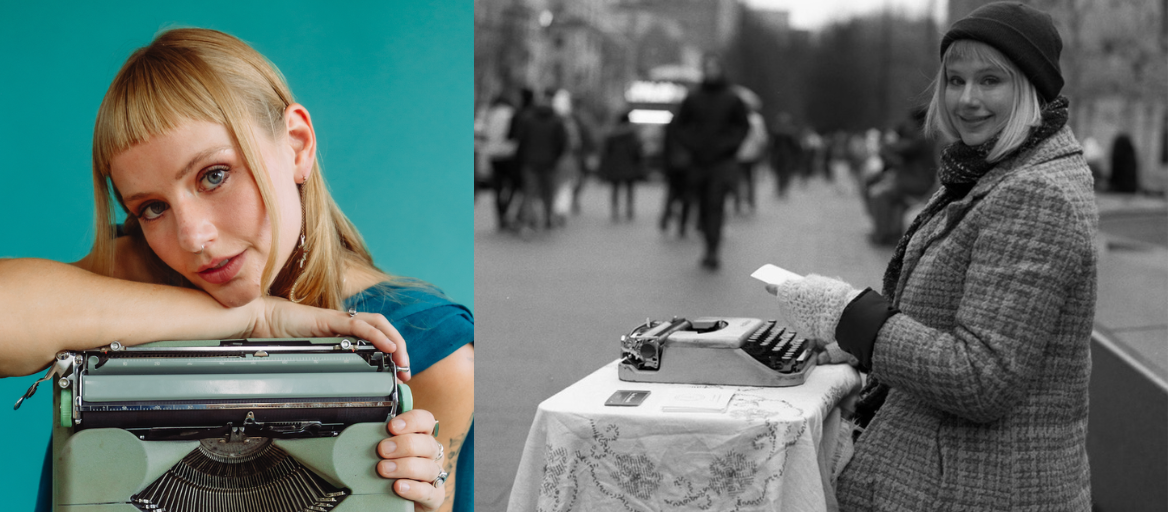
Poetry for strangers: Meet the typewriter poet rebuilding human connection in NYC
In today’s hyper-digital world, genuine human connection can feel rare. But one New York-based poet is helping strangers find their way back to each other—in a very analog way. With a small table and her great-grandfather's 1931 Remington Noiseless typewriter, artist and author Zoe Branch began setting up shop around New York City in 2020, offering custom poems on the spot based on prompts from passersby. To her surprise, the demand was huge. “The most I knew at that time about starting a business had to do with a vague concept of supply and demand,” she recalls. “And it seemed there was—more than I could have ever imagined—a demand for poems.”
For Zoe, art-making is healing and her typewriter is a tool for building that connection with others. By listening closely to the stories strangers share and transforming their words into personalized poetry, she creates something rare: a moment of intimacy between people who may never meet again. “When someone is standing in front of me, telling me their story or ideas, there’s usually one thing they say that feels like it shimmers with the heart of what they mean,” she says, “And that’s what I snag and build the poem around.”
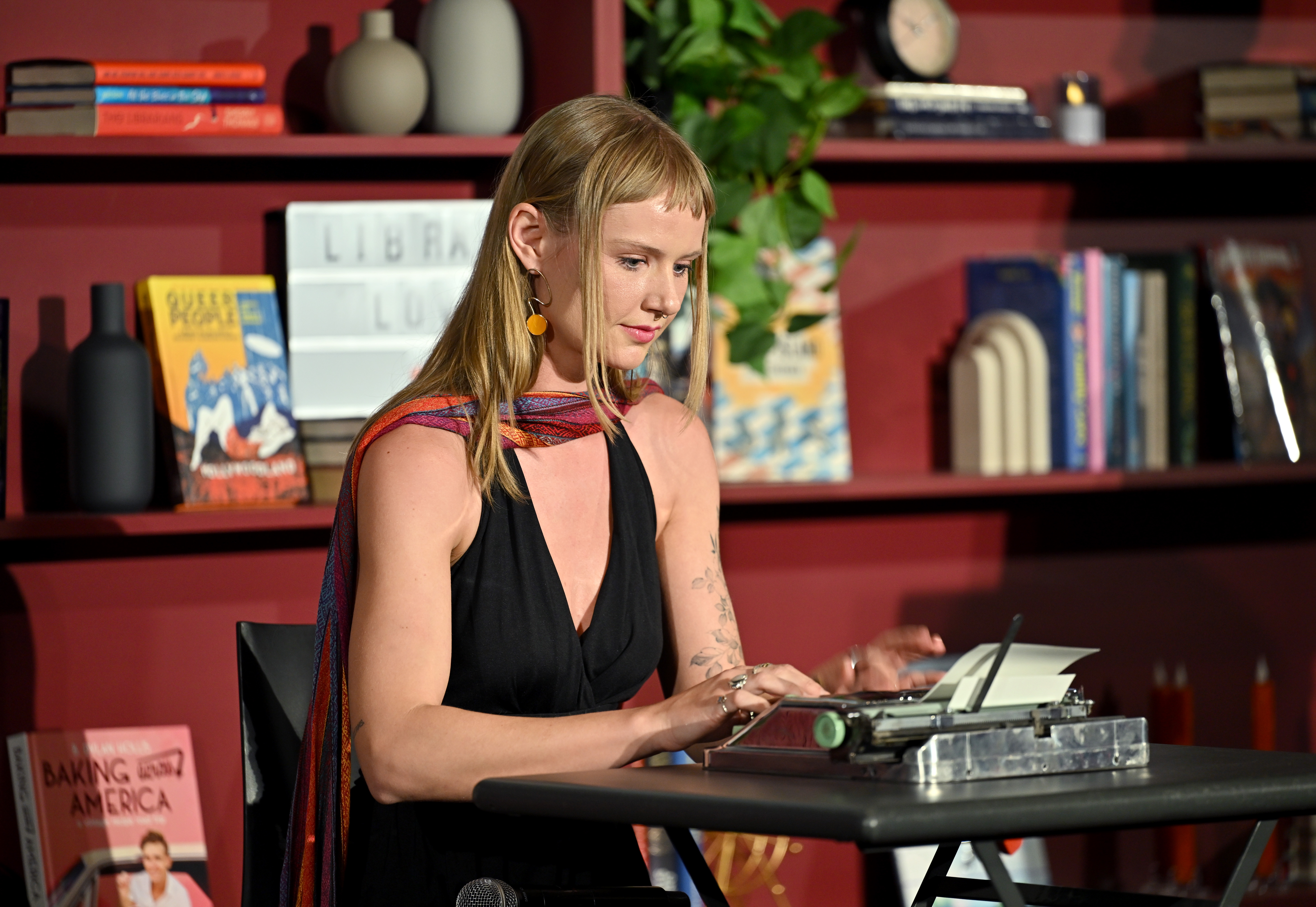
These days, Zoe is rotating between a fleet of 15 different specialty typewriters, and spends time at special events, like this year’s Libby Book Awards, while also writing her debut novel. But no matter where she’s typing, the purpose behind her unique craft is the same—to listen to people’s stories and reflect back to them through the power of the written word.
Find out more about Zoe’s one-of‑a‑kind profession as a typewriter poet in this Q&A, including how she got started to the surprising prompts that have stayed with her.
Libby Life: What exactly is a typewriter poet?
Zoe: A typewriter poet is a writer who creates personalized poetry—on the spot, on a typewriter. It’s a kind of performance-based creation that often takes place on the street or in other public spaces. Typically, a stranger will approach the poet, give them a topic (which can be anything from a singular word to an entire story), and then the poet uses those details as inspiration to write an impromptu poem, specifically dedicated to the person in front of them.
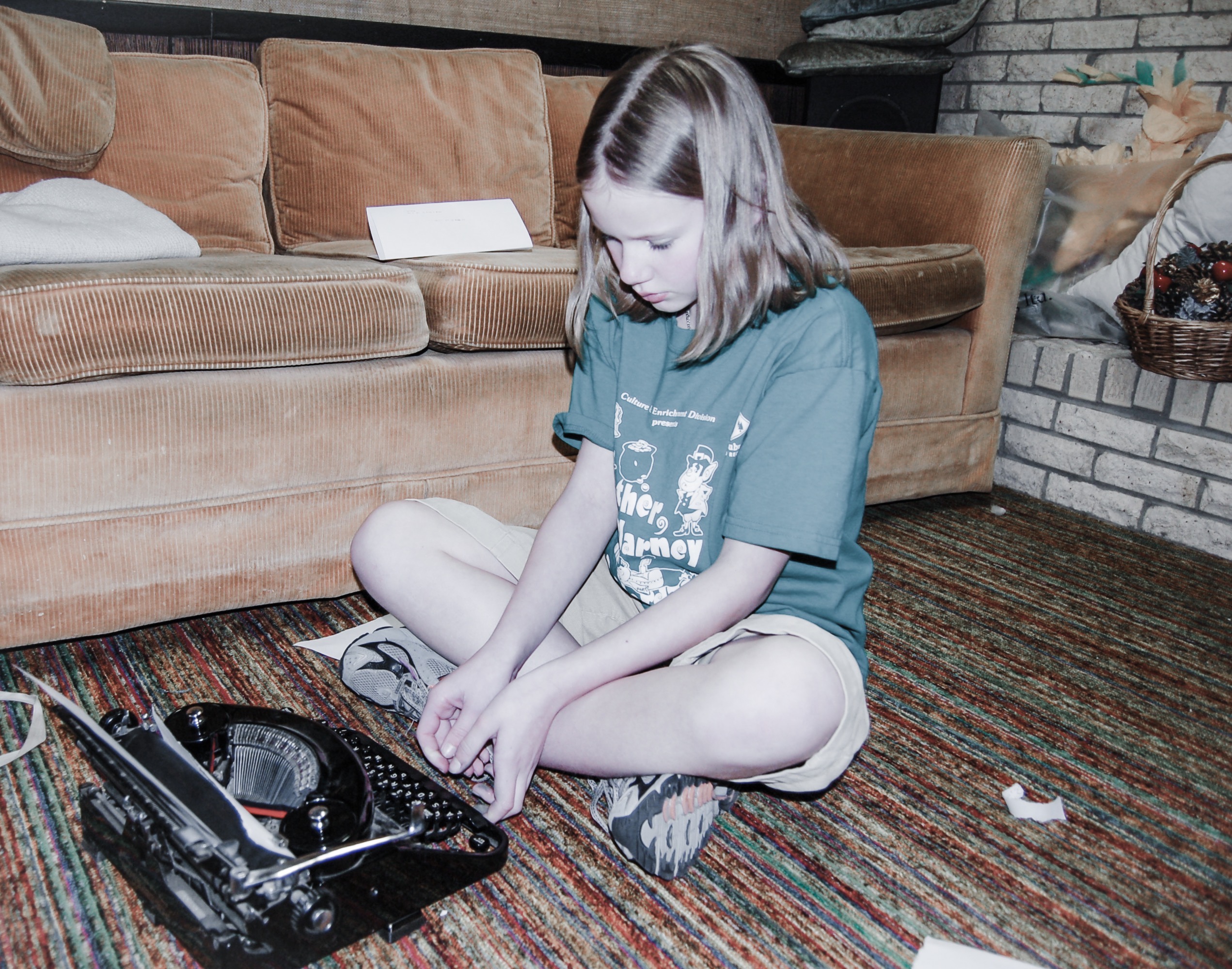
I stumbled accidentally into typewriter poetry in 2018 after having inherited my great-grandfather’s 1931 Remington Noiseless typewriter. It was a machine that I’d loved when I was a kid (see below me sitting on my grandparents’ basement floor writing probably a short story on it in the early 2000s) that came back to me in my adulthood. I started writing poems for friends and family on it, which—to my surprise—garnered requests to write for friends of friends, acquaintances, and finally, strangers. The most I knew at that time about starting a business had to do with a vague concept of supply and demand, and it seemed there was—more than I could have ever imagined—a demand for poems. And so, my typewriter poetry business was born.
Libby Life: Do you remember the first poem you ever wrote for someone? What was that moment like?
Zoe: The first poem I ever wrote on a typewriter for another person was for my grandfather, who was one of my biggest inspirations. He was the limerick man of my family: he performed a custom limerick for every big occasion—weddings, birthdays, graduations, you name it. I wanted to write him a limerick as a gift after he received a cancer diagnosis; I hoped it might comfort him by signaling that I could take the limerick baton after he was gone. Writing that poem was also a part of the beginning edges of my grieving process, realizing that he probably didn’t have long left with us. That poem was really the catalyst for my entire business.
He was a real fighter and hung on for a good long time, and didn’t pass until last March, at the age of 94. It feels very special to know that the work I’m still doing now, and any impact that I have through it, is infused with a bit of his spirit. I don’t know if I would be doing this work if it weren’t for him.
Libby Life: Tell us about your typewriter, how you found it, and what it means to your practice vs. writing digitally.
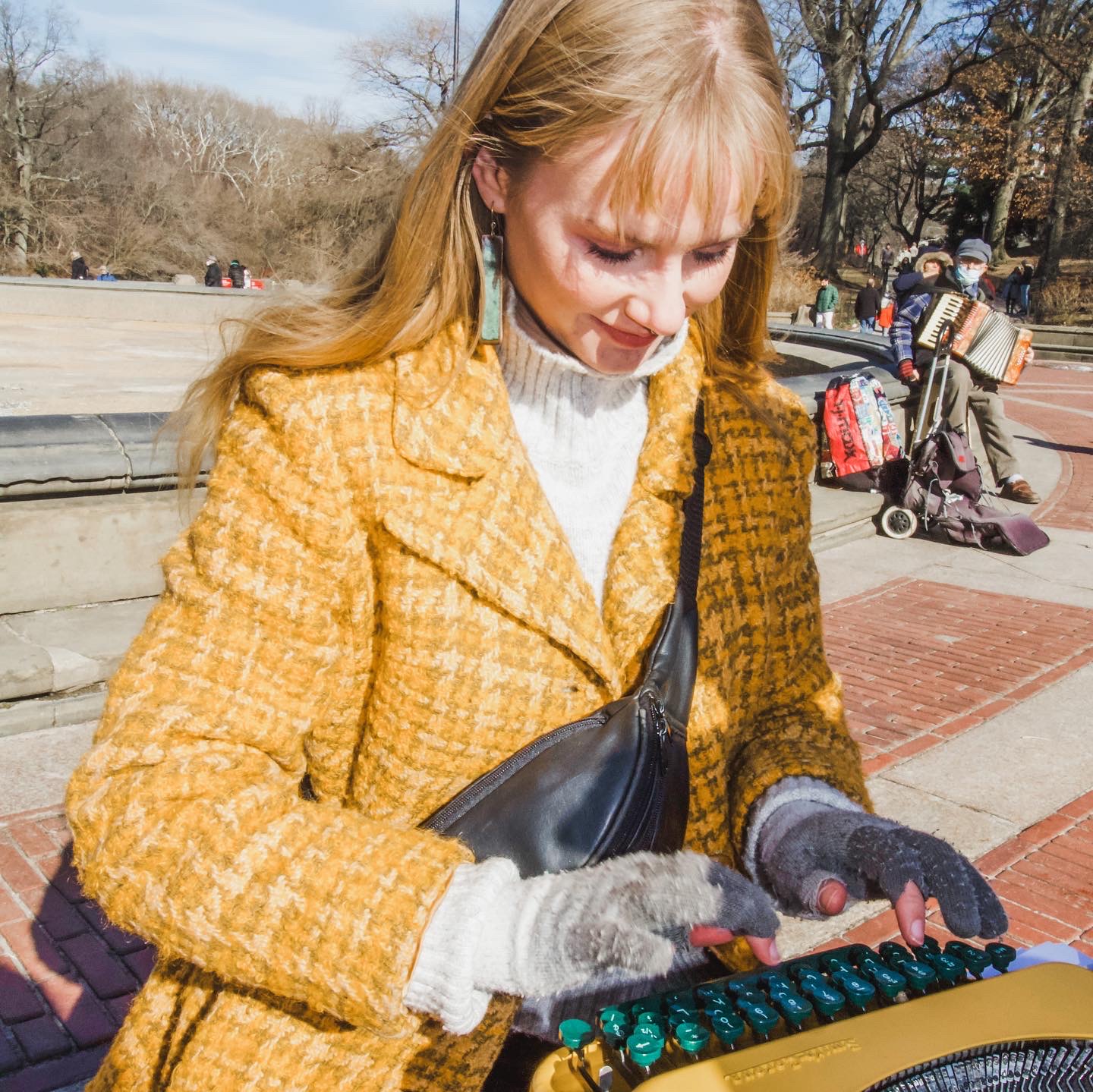
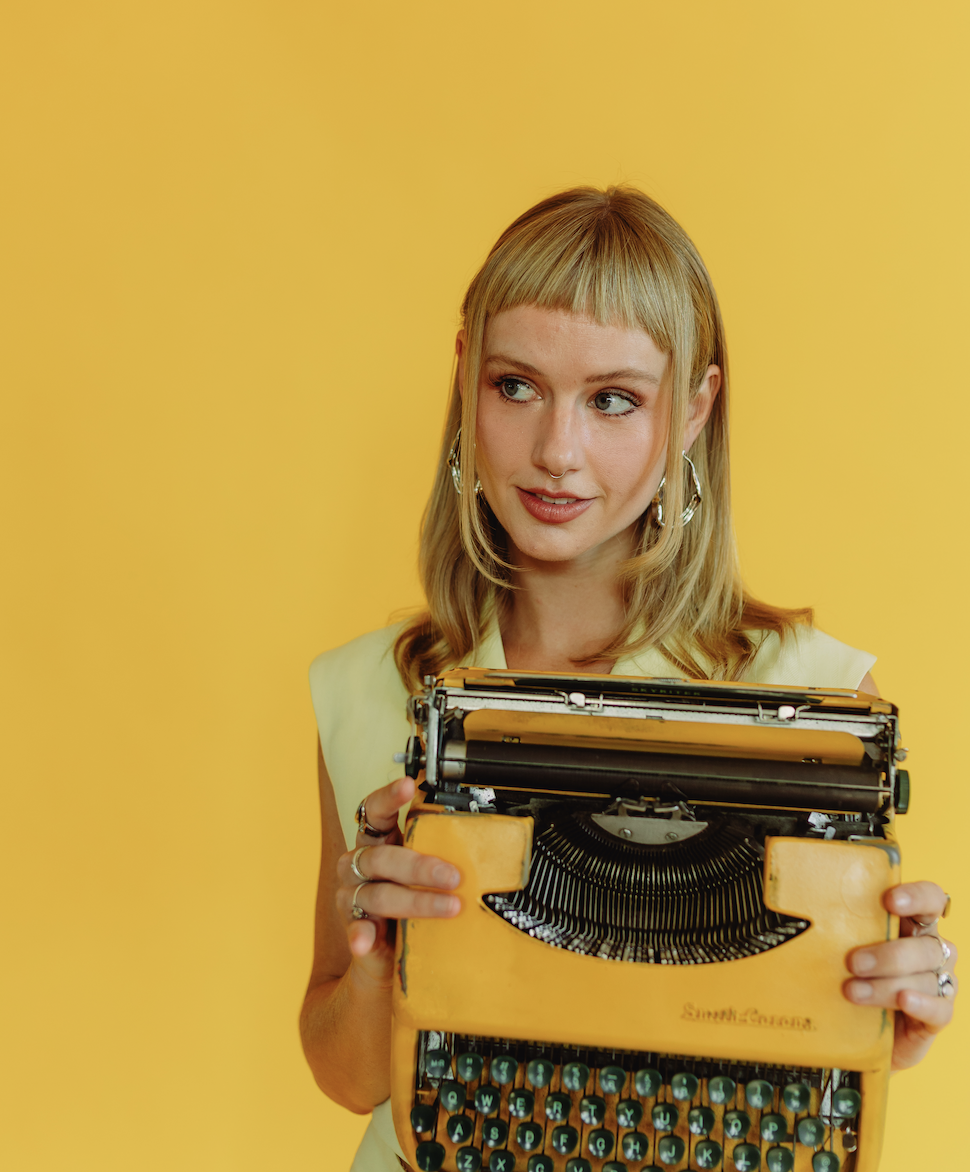 Zoe: My first typewriter was the one that belonged originally to my great grandfather; my second was my granddad’s on my other side. Once I started using typewriters in public, it was amazing how more machines started to find me. Friends gave me old typewriters they’d been considering getting rid of. I’d see one at an estate sale for $25 that was in pretty good working condition and take it home with me. I was given one by a teenage girl in exchange for a poem. I stumbled upon one on the street.
I’ve become a bit of a collector in the eight years I’ve been doing this and currently have 10 typewriters at home—somewhat absurd for the fact that I live in a small apartment in Brooklyn—plus another five at my parents’ house in Denver, which is a sort of backup fleet. Just in case. You never know when you might need five typewriters.
Writing on a typewriter is such a wonderful experience—I genuinely believe everyone should have one, especially as our world becomes increasingly digitized. Being completely disconnected from the internet, without distraction, is a such a gift, as is the tactility of the keys and the satisfaction of the sounds. People hear a typewriter clacking away and can’t help but come and tell me about machines they’ve had in the past. As physical objects, they hold so much history and emotion in them. They each have their own funny little quirks, like people.
But my favorite thing about writing on a typewriter is that it requires absolute, unabashed presence. The only way to go is forward. What’s on the page is on the page. I write differently on a typewriter than I do digitally: the nature of the machine itself—the fact that there is no such thing as deleting something—necessitates a radical acceptance of mistakes, which leads to play. When you’re forced to work with what you’ve already written, instead of having the option to easily start again and again, to move things around, to change a word a hundred times, it closes certain doors. Which means: it opens other windows.
“...the nature of the machine itself—the fact that there is no such thing as deleting something—necessitates a radical acceptance of mistakes...”
Libby Life: Do people ever surprise you with their prompts? Any memorable ones that have stuck with you?
Zoe: A surprising prompt is my favorite kind of prompt! Aliens gentrifying the earth is one that always comes to mind as a fun and memorable topic. A man once asked me to write a poem for a rare Byzantian coin that he had just purchased—he told me all the history of it and let me hold it, which was so cool. At a conference, a woman surprised me by asking for a poem about menopause, after which she seemed a little uncertain and walked the topic back to be just “new beginnings.” I wrote the poem about menopause, and we shared a really special cross-generational moment.
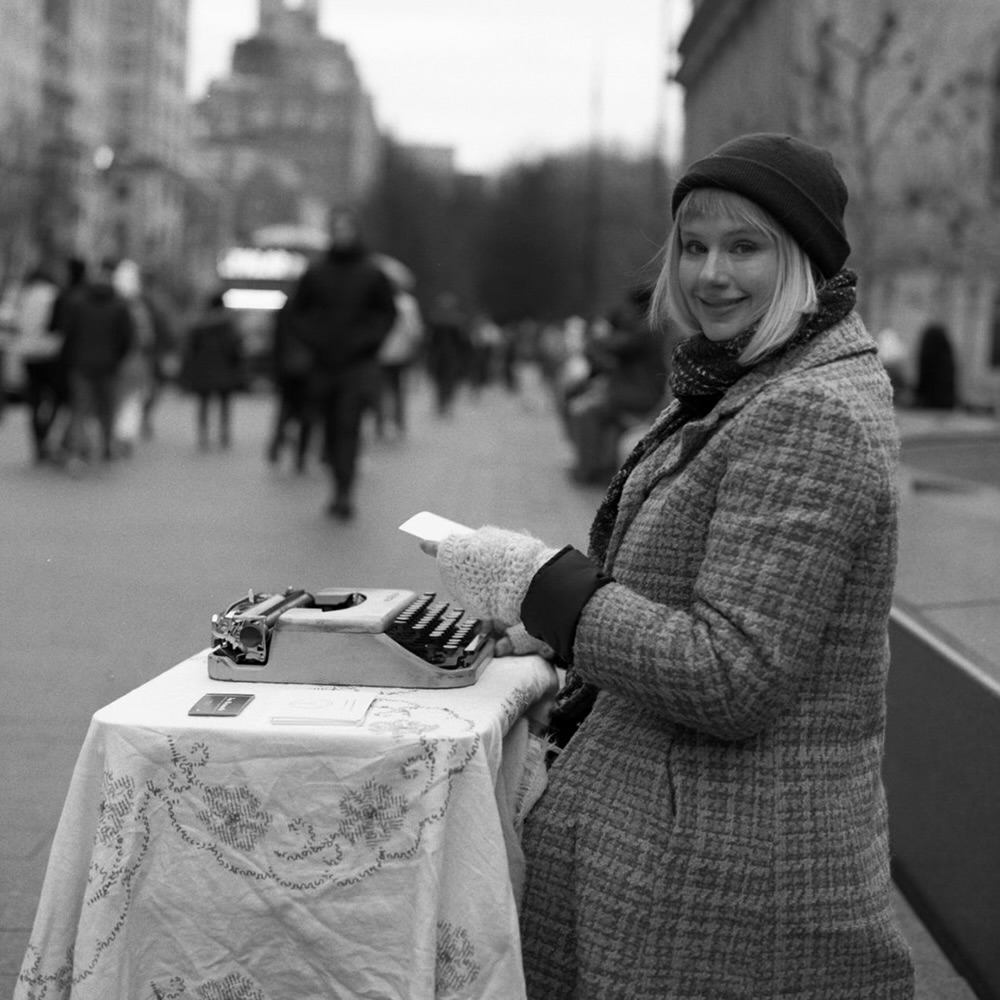
Ultimately, my work is about listening to people and reflecting back to them their own experiences as much as I can; even if I haven’t had the experience myself, I hope that by extending a certain kind of presence and empathy, I can still stretch myself enough to meet them where they are.
Libby Life: What do you hope someone feels when they walk away with a poem you’ve written just for them?
Zoe: I hope they feel seen and heard and connected. There are so few venues for strangers to be vulnerable with one another, and I hope to provide that to as many people as I can. I often call the poem “a receipt for human interaction”: you told me something, I listened to you, and I filtered the idea through poetry and gave it back to you. I hope that people walk away from interacting with me feeling lighter and part of something bigger than themselves, which is the gift that so many strangers give to me daily. The work makes me feel unbelievable interconnected and hopeful about people: their openness, their generosity, and the way we are so much more similar than we are different.
“I often call the poem ‘a receipt for human interaction’...There are so few venues for strangers to be vulnerable with one another, and I hope to provide that to as many people as I can."
Libby Life: Are there any books that have shaped your creative life?
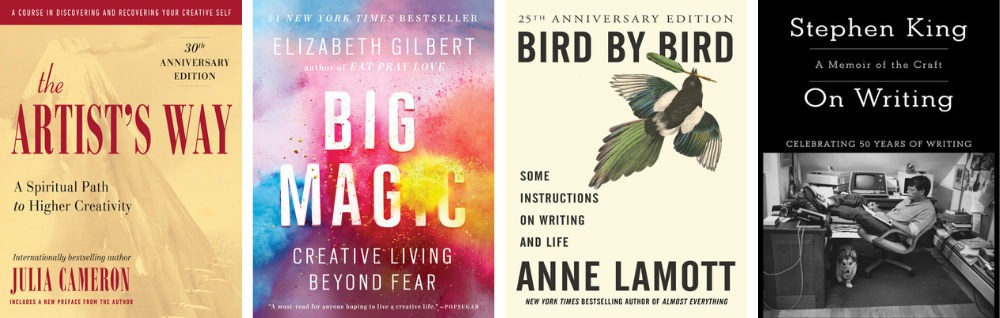
Zoe: So, so many. The Artist’s Way has helped me immensely. Big Magic by Elizabeth Gilbert. All of Ada Limón’s poetry. So many of Margaret Atwood’s novels. That Mary Oliver line that says, “Instructions for living a life: pay attention. Be astonished. Tell about it.” Not a book but—the interview that Krista Tippett of “On Being” does with poet Naomi Shihab Nye (and so many of Tippett’s interviews)—very formative. Bird by Bird by Anne Lamott. On Writing by Stephen King.
Libby Life: Are there any upcoming projects or collaborations you’re excited about?
Zoe: As you might be able to tell from my inspiration list, I am not strictly a poet but am also a novelist! I am currently in the process of revising my first novel, Daughter, Daughter, which is about a motherless 19-year-old painter nannying for a narcissistic Manhattan gallerist—who is keeping from her a life-changing secret. The story follows the young woman’s relationship to her own creativity, the art world, her sense of abandonment, and the six-year-old girl she becomes responsible for. It’s The Devil Wears Prada meets Susan Rieger’s Like Mother, Like Mother, with the complicated childcare dynamics of Kiley Reid’s Such a Fun Age.
Libby Life: What are you reading or listening to right now?
Zoe: I’ve been reading more than ever recently as I’ve taken a TV hiatus while finishing my book.
Currently reading:
- Get the Picture by Bianca Bosker
- No One Is Talking About This by Patricia Lockwood
- Boy, Snow, Bird by Helen Oyeyemi
- The Dry Season by Melissa Febos
- Just Kids by Patti Smith
- Reality Transurfing by Vadim Zeland
I recently finished (and had my heart broken by, god there are so many good books):
- Ask Again, Yes by Mary Beth Keane
- The Safekeep by Yael van der Wouden
- Instructions for a Heatwave by Maggie O’Farrell
Libby Life: Can you write a poem for our readers?
Zoe:
"Tell me again of books as a portal
of sorts. Like a time-machine we
could collectively step into. Tell
me of the past and the future,
of the glorious now, of the sound
of paper which is turning. How a book
is a tunnel dark with yearning
is the light at its end
is the switch flipped then
the sun rushing in; it is doors
swung open it is hope we could hold
in our palms if only we paused
with the pages. As the ages
move faster. As we forget
to slowly savor. Tell me of books
as a compass which illuminates."
You can learn more about Zoe and even request a custom poem at her website. She’s currently editing her first novel, Daughter, Daughter.
Published Apr 03, 2026
Annie Suhy
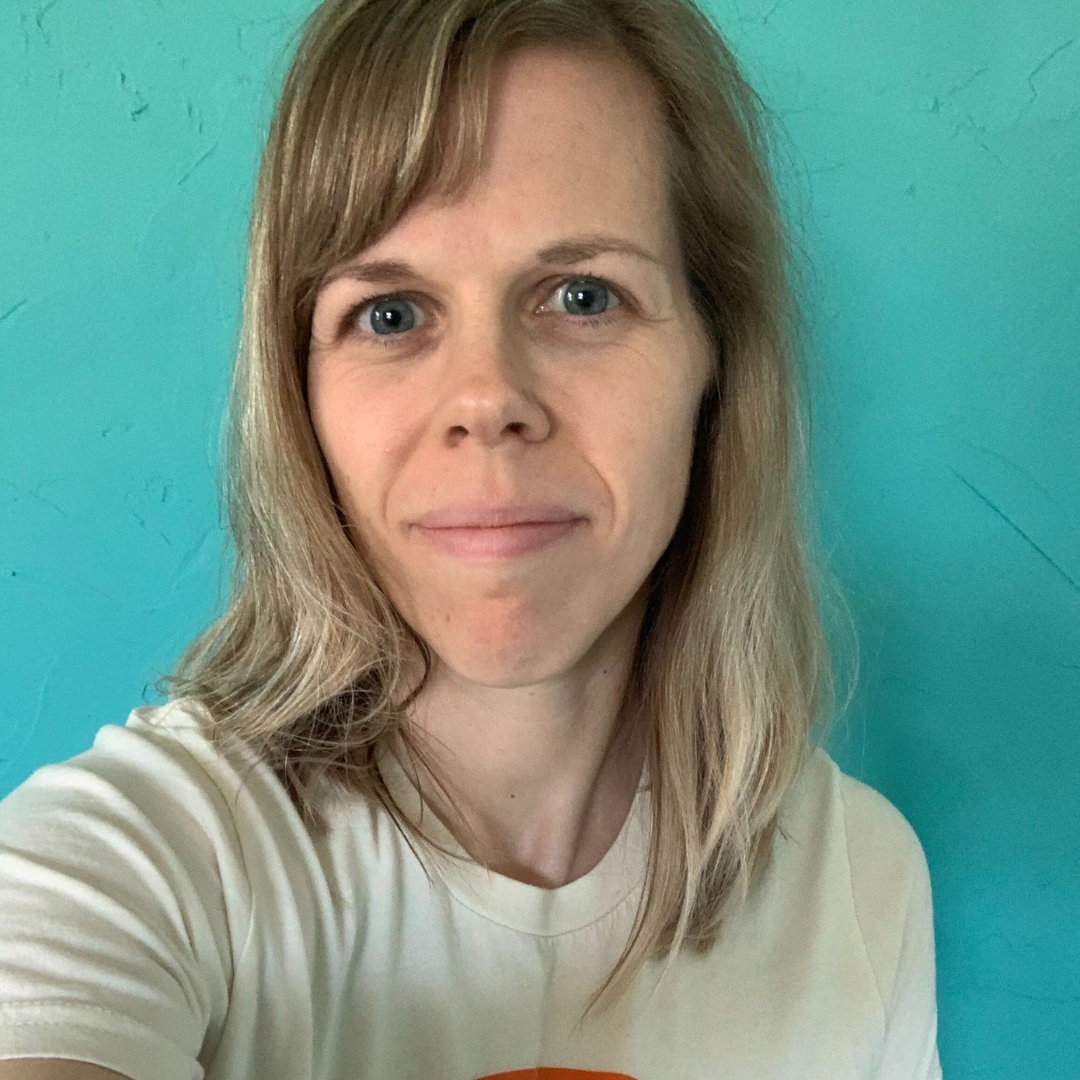
Annie Suhy is a writer for Libby Life. When she’s not working, practicing yoga, or petting cats, she’s doing paint-by-numbers and buying more plants. An avid poetry fan, her favorite collection is The Splinter Factory by Jeffrey McDaniel. She is an Aries.